VIDEO: Nederlandse agent is klaar met zachte handjes en grijpt keihard in bij tuig op straat

Dutch Police Take Firm Action in Street Confrontation, Showing Balance Between Strength and Professionalism
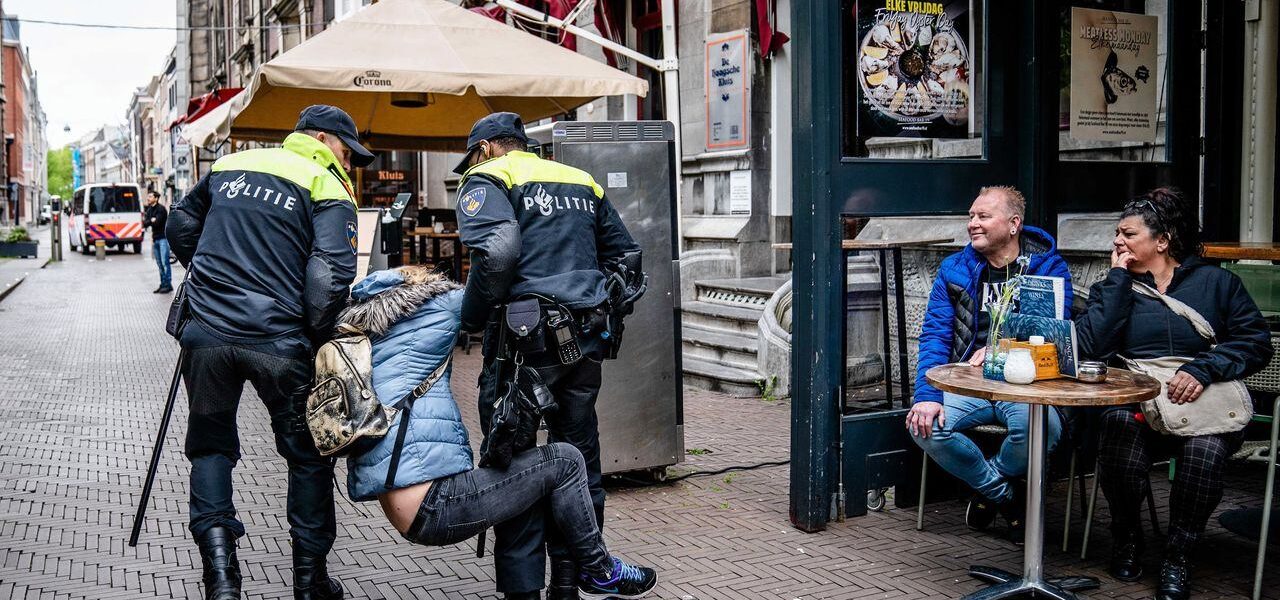
In a busy Dutch street, what began as an ordinary situation quickly escalated into a tense confrontation. Three police officers stepped in decisively, demonstrating a level of control and professionalism that left a lasting impression on bystanders. The incident, captured on video and rapidly shared across social media, has sparked widespread discussion about the balance between firm policing and restraint.
/s3/static.nrc.nl/images/gn4/stripped/data71377688-114a01.jpg)
Resolute but Controlled Intervention
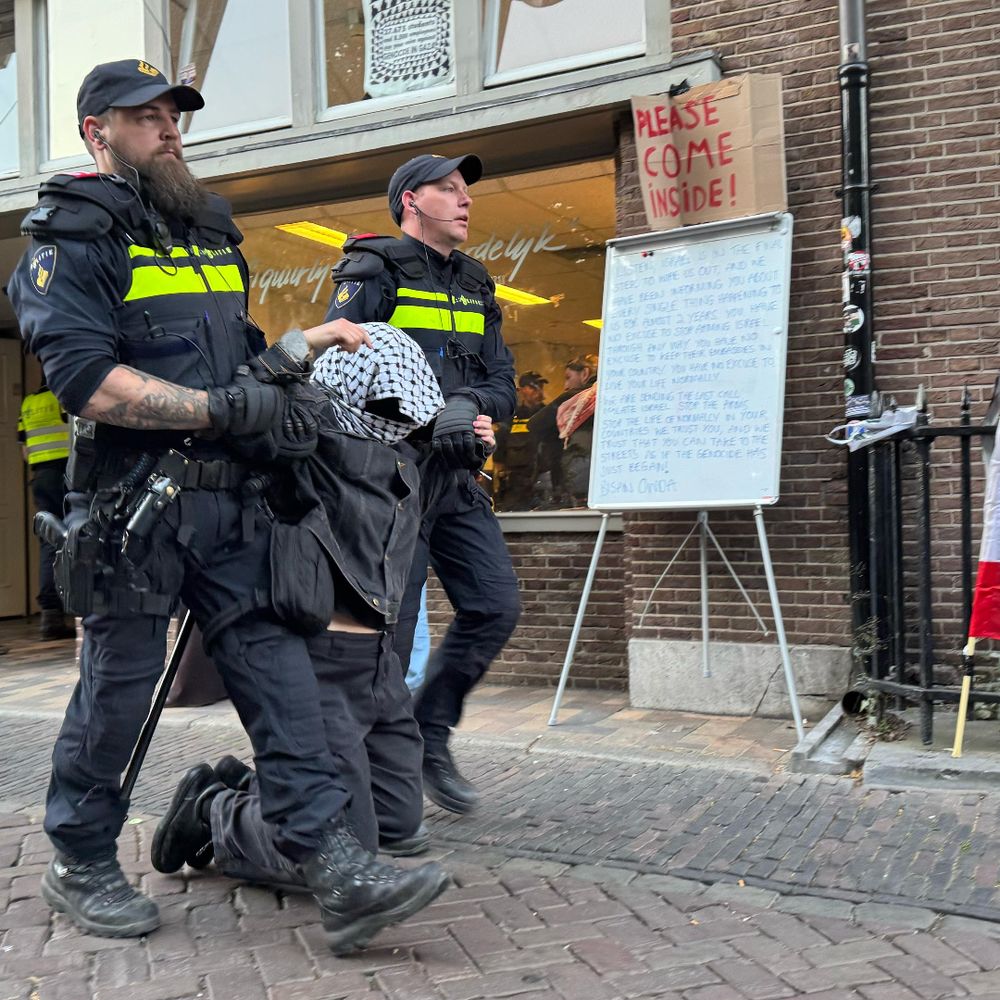
Footage from the scene shows one officer engaged in a physical struggle with a suspect who resisted arrest. While attempting to bring the individual under control, a woman—identified as the suspect’s partner—interfered, pushing the officer in an effort to protect the man. Despite the chaos, the officer maintained composure, calmly pushing the woman aside multiple times without resorting to excessive force.
The swift and measured response highlights the delicate balance required in modern policing: taking decisive action to prevent further escalation while exercising restraint. The officers’ movements were precise, controlled, and focused on safely securing the suspects without unnecessary violence.

Public Reactions and Social Media Surge
As often happens in such cases, bystanders recorded the incident and shared the video online, where it quickly went viral. Reactions ranged from admiration to critical discussion, though the majority of comments expressed support for the police’s handling of the situation.
“Respect for the law enforcement,” and “Chapeau to the police” were among the most common remarks, reflecting public approval for an approach that is firm yet professional. For many viewers, the video demonstrated that officers are willing to act decisively when circumstances demand it.
Building Trust Through Decisive Action
Experts note that public confidence in the police often increases when citizens observe officers taking action to maintain order, especially in potentially volatile situations. This incident serves as a clear example: the officers intervened firmly but avoided excessive force, reinforcing both authority and professionalism.
“Trust grows when the public sees that police can act firmly but fairly,” one security analyst commented. “Situations like this show that there’s a balance between strength and restraint, which is critical for maintaining community confidence.”
Debate Over Policing Tactics
While the response was widely praised, opinions remain divided. Critics warn that overly aggressive tactics can sometimes escalate conflicts or create misunderstandings. The tension between a “soft touch” and a “hard line” in policing continues to spark debate in the Netherlands and beyond.
In this case, however, the prevailing sentiment was positive. Observers noted that the officers acted decisively without overstepping boundaries, earning appreciation and respect from the majority of witnesses and social media users.
Expert Insights on Training and Professionalism
Security professionals emphasize that incidents like this highlight the importance of comprehensive police training in both physical control and communication.
“Situations can shift from calm discussion to physical confrontation in seconds,” explained a former police instructor. “The difference between chaos and a controlled outcome is preparation and discipline.”
The officers involved demonstrated exactly that. Their training enabled them to subdue the suspects effectively while preventing unnecessary harm and maintaining order in a tense public setting.
The Fine Line Between Firmness and Excess
Police work often involves walking a thin line. Officers must assert authority to enforce the law but avoid actions that could be perceived as excessively violent. In this case, the balance appeared well-struck. The suspects were subdued with precision, and the intervention conveyed authority without resorting to harsh measures. The outcome serves as a model of what the public expects in high-pressure encounters.
Social Media’s Role in Accountability
The rapid spread of the video online illustrates the growing influence of social media in shaping public perceptions of policing. Videos like this can spark debate, provide learning opportunities for law enforcement, and increase transparency. At the same time, clips can be shared out of context or misinterpreted, highlighting the challenges that come with public scrutiny.
Regardless, the visibility of the incident emphasizes the increasing importance of accountability. The eyes of the public have become a key measure of policing effectiveness.
Implications for Society
This episode is more than just an arrest; it sends a broader message to society. Citizens witness the enforcement of rules and the capacity of law enforcement to act decisively when needed. In an era of ongoing discussions about safety, authority, and police conduct, examples like this can reinforce confidence in public institutions.
The Dutch police officers involved demonstrated that it is possible to be both firm and humane—a combination that strengthens trust in law enforcement while maintaining public safety. By showing that strong action can coexist with professionalism and restraint, the incident sets a standard for handling high-stakes encounters in urban environments.
Conclusion
The Dutch street confrontation serves as a reminder that policing requires a delicate balance: authority tempered with empathy, strength combined with discipline. For many viewers, the officers’ conduct exemplified this ideal, illustrating that law enforcement can act decisively, protect the public, and maintain order without resorting to unnecessary force.
As the video continues to circulate online, the discussion it inspires may contribute to broader understanding of effective policing strategies. Citizens and experts alike are watching, learning, and reassessing expectations—demonstrating the power of transparency and professionalism in shaping the relationship between police and the community they serve.